
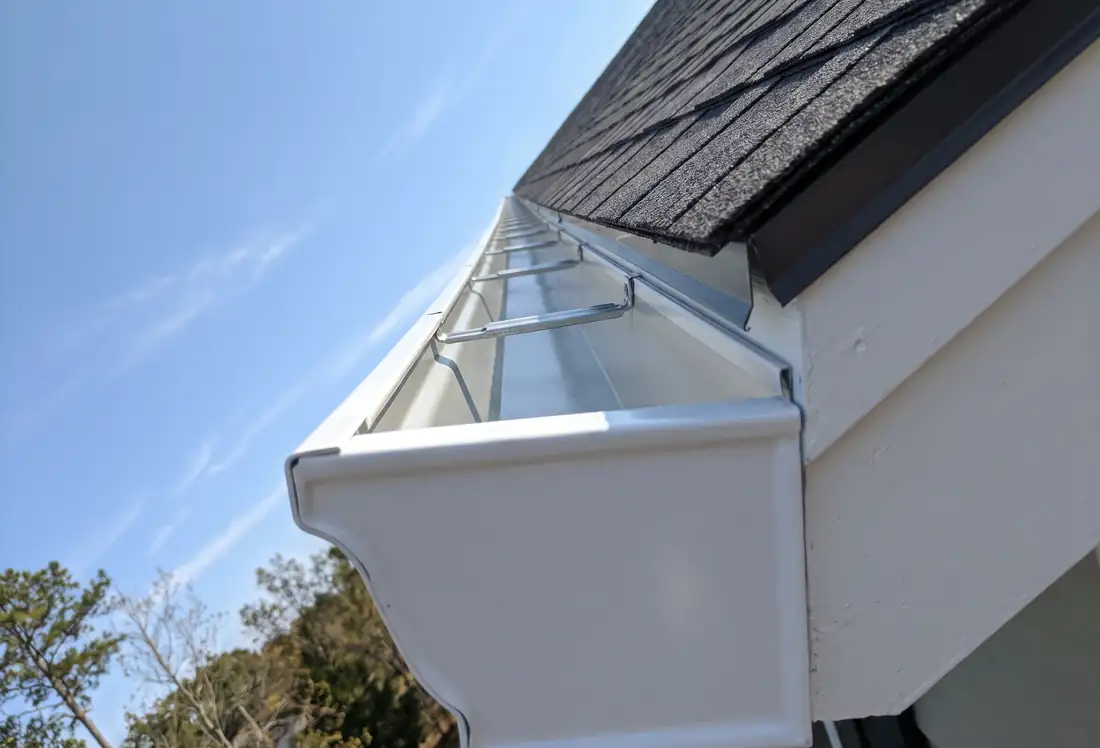
Three causes
Loose spikes. Gutters fitted up to the 1990s were often held by long spikes driven through the face. Each freeze and thaw works them out a little. In time they slide free.
Too few hangers. Hangers three or four feet apart hold an empty gutter. They do not hold one full of ice.
Rotten fascia. No fixing holds in soft wood.
What it does
A gutter that dips holds water at the low point. That water breeds mosquitoes in summer, freezes in winter, and overflows in rain at the worst place, often over a door or a path.
The repair
- Take the run off its old fixings.
- Check the fascia and replace any soft sections.
- Strike a line for the fall: about a quarter inch in ten feet, toward the downspout.
- Screw hidden hangers through the back of the gutter into the fascia, at two feet or closer.
- Seal the old spike holes.
- Reseal corners and end caps while the run is down.
- Test with water.
If the metal is straight, the same gutter goes back up. Only a creased or kinked length needs replacing.
Why winter matters
Indianapolis averages 25.9 inches of snow a season. Wet snow and ice in a gutter can weigh many pounds a foot. That load, repeated each winter, is what finishes off loose fixings. See ice and snow damage.
A common mistake
Driving the old spikes back in, or adding longer ones. The hole is already enlarged, and they work out again. Hidden hangers with screws grip new wood.
When to replace instead
- The gutter is creased where it sagged
- It has been re-hung before and the fascia is full of holes
- The run is the wrong size and overflows even when level