
How much more it carries
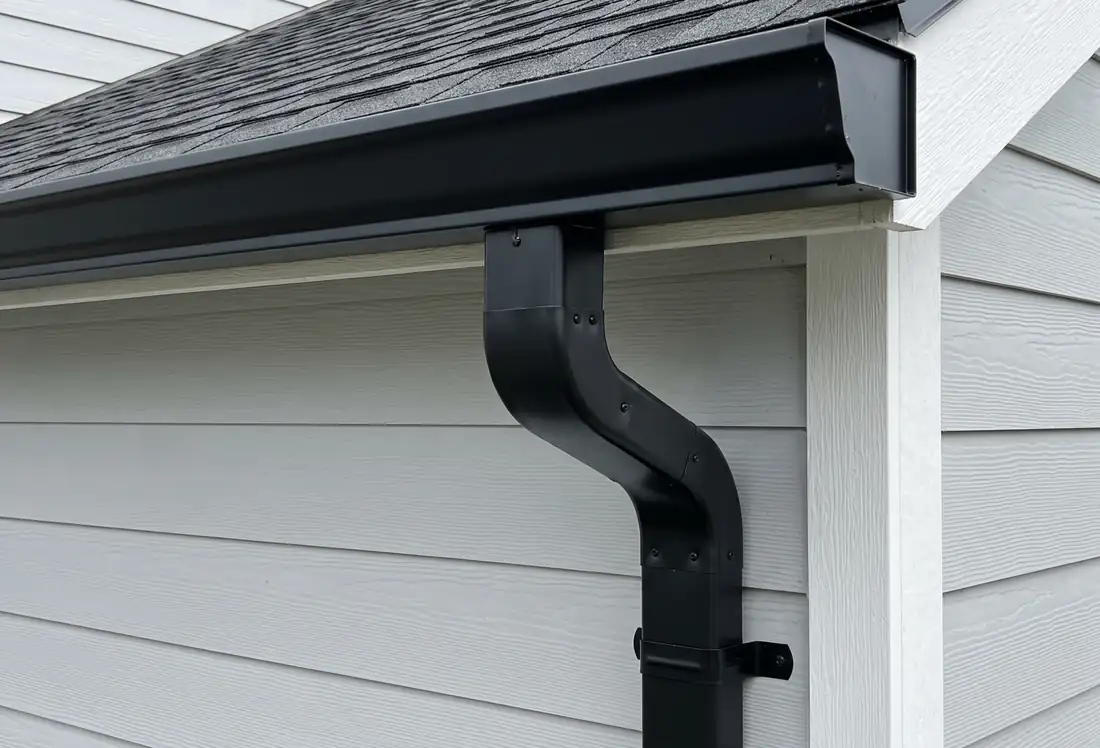
A 6-inch K-style gutter holds roughly 40% more water than a 5-inch one. Paired with a 3x4 downspout, which has about twice the opening of a 2x3, the whole run clears water much faster.
Roofs that need it
- A lower roof taking water from an upper one. When an upstairs downspout empties onto the garage or porch roof, the lower gutter carries both.
- A valley over a short gutter. Two roof planes meet and pour into a few feet of gutter.
- A long or steep roof plane. More than about 20 feet from ridge to eave, or a pitch steeper than 8 in 12.
- A long run with one outlet. Where a second downspout cannot be added.
- Metal roofs. Water leaves them faster than it leaves shingles.
Why this matters in Indianapolis
The city's rain comes mostly from thunderstorms, with about 20 thunderstorm days a year. Gutters are tested by the heaviest few minutes of those storms. A 5-inch gutter that copes all spring can spill over in one July downpour.
When 5-inch is enough
A single-storey house with a simple roof, runs under about 40 feet and a downspout at each end rarely needs more. Adding a downspout to an overflowing 5-inch run is often cheaper than replacing it with 6-inch.
Mixing sizes
A house does not need one size all round. It is common to fit 6-inch on the two or three runs that overflow and leave 5-inch elsewhere. From the ground the difference is slight.
Fixing it properly
Bigger gutters hold more water and more ice. The 25.9 inches of snow in an average season adds to that load. Hangers should be at two feet or closer, and closer still below a valley.
More detail is in 5-inch or 6-inch gutters.